The Anterior Cruciate Ligament (ACL) is one of the most important ligaments in the knee. It helps stabilize the joint and supports movements such as running, jumping, pivoting, and sudden direction changes. ACL injuries are common among athletes, fitness enthusiasts, and even individuals involved in everyday activities.
While some ACL injuries can be managed with rehabilitation, others may require ACL reconstruction surgery to restore knee stability and function. Understanding the warning signs can help you seek timely treatment and prevent further damage.
What Is an ACL Injury?
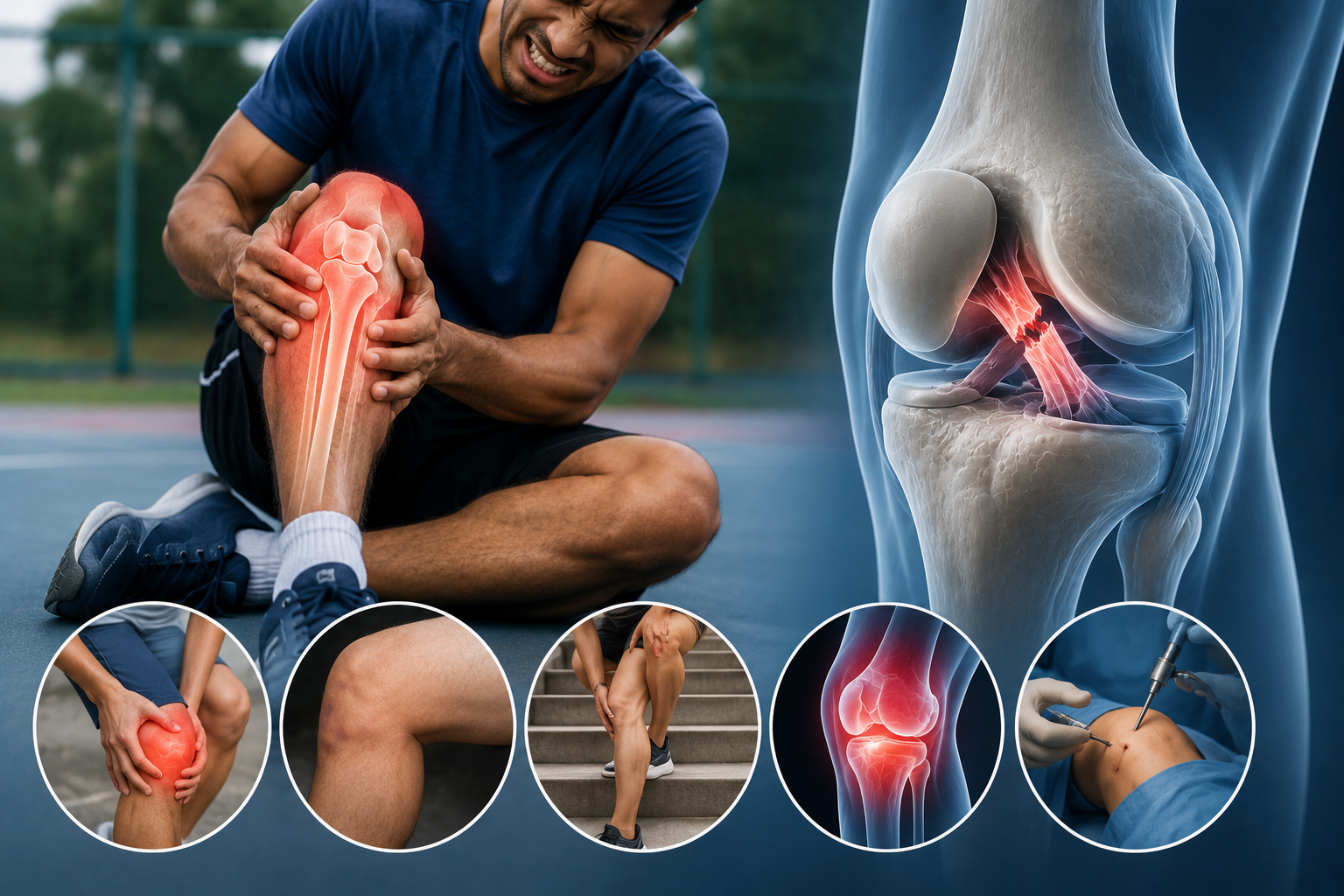
The ACL is located in the center of the knee and connects the thigh bone (femur) to the shin bone (tibia). It helps control forward movement and rotational stability of the knee.
An ACL injury usually occurs due to:
- Sudden twisting movements
- Landing awkwardly after a jump
- Rapid changes in direction
- Sports-related collisions
- Falls or accidents
Many patients report hearing or feeling a “pop” at the time of injury.
Common Symptoms of an ACL Tear
The severity of symptoms depends on the extent of the injury.
1. A Popping Sensation During Injury
Many people experience a sudden popping sound or sensation when the ACL tears. This is often one of the earliest signs of a significant ligament injury.
2. Immediate Swelling
Rapid swelling within the first few hours after injury is common. This occurs due to bleeding inside the knee joint caused by ligament damage.
3. Knee Instability
A feeling that the knee is “giving way” during walking, running, or turning is one of the strongest indicators of an ACL injury.
4. Difficulty Walking
Patients may find it difficult to bear weight on the affected leg due to pain, swelling, or instability.
5. Reduced Range of Motion
Stiffness and swelling can make it difficult to fully bend or straighten the knee.
6. Persistent Knee Pain
Although pain may improve over time, ongoing discomfort during physical activity often suggests underlying instability.
Signs You May Need ACL Reconstruction Surgery
Not every ACL tear requires surgery. However, surgery may be recommended if the injury significantly affects knee function and daily activities.
Persistent Knee Instability
If your knee repeatedly buckles or feels unstable despite physiotherapy, surgery may be necessary to restore normal function.
Active Lifestyle or Sports Participation
Individuals who participate in sports involving jumping, cutting, pivoting, or rapid movements often benefit from ACL reconstruction to safely return to activity.
Associated Knee Injuries
ACL tears are frequently accompanied by:
- Meniscus tears
- Cartilage damage
- Other ligament injuries
In such cases, surgical treatment may be the most effective option.
Failure of Conservative Treatment
If symptoms continue despite rehabilitation, strengthening exercises, and lifestyle modifications, reconstruction surgery may be recommended.
Recurrent Knee Giving Way
Repeated episodes of instability increase the risk of further damage to cartilage and menisci, potentially leading to early arthritis.
How Is an ACL Tear Diagnosed?
A knee specialist will typically perform:
- Detailed medical history
- Physical examination
- Stability testing
- MRI scan
- X-rays when necessary
MRI is particularly useful for confirming the extent of ligament damage and identifying associated injuries.
What Is ACL Reconstruction Surgery?
ACL reconstruction is a minimally invasive arthroscopic procedure that replaces the torn ligament with a graft. The new ligament acts as a scaffold and gradually becomes integrated into the knee.
Benefits of ACL reconstruction include:
- Improved knee stability
- Reduced risk of further injury
- Better sports performance
- Increased confidence during movement
- Return to an active lifestyle
Recovery After ACL Reconstruction
Recovery varies between individuals, but most patients can expect:
- Early mobilization after surgery
- Structured physiotherapy program
- Gradual strengthening exercises
- Return to daily activities within weeks
- Return to sports after appropriate rehabilitation
Following your surgeon’s recovery plan is essential for achieving the best outcomes.
Tips to Prevent ACL Injuries
- Warm up before physical activity
- Strengthen leg and core muscles
- Practice proper landing techniques
- Improve balance and coordination
- Wear appropriate footwear
- Avoid overtraining
Conclusion
An ACL tear can significantly affect knee stability, mobility, and athletic performance. While some injuries respond well to rehabilitation, persistent instability, recurrent giving-way episodes, and active lifestyles often make ACL reconstruction the best treatment option.
Early diagnosis and expert evaluation are crucial to protecting your knee and preventing long-term complications. If you are experiencing symptoms of an ACL injury, consulting an orthopedic specialist can help determine the most effective treatment plan and guide you toward a safe recovery.