Many people use the terms “slip disc” and “sciatica” interchangeably, but they are not the same condition. While both can cause back and leg pain, understanding the difference is important for proper diagnosis and treatment. Knowing what is causing your symptoms can help you seek the right medical care and prevent the condition from worsening.
What Is a Slip Disc?
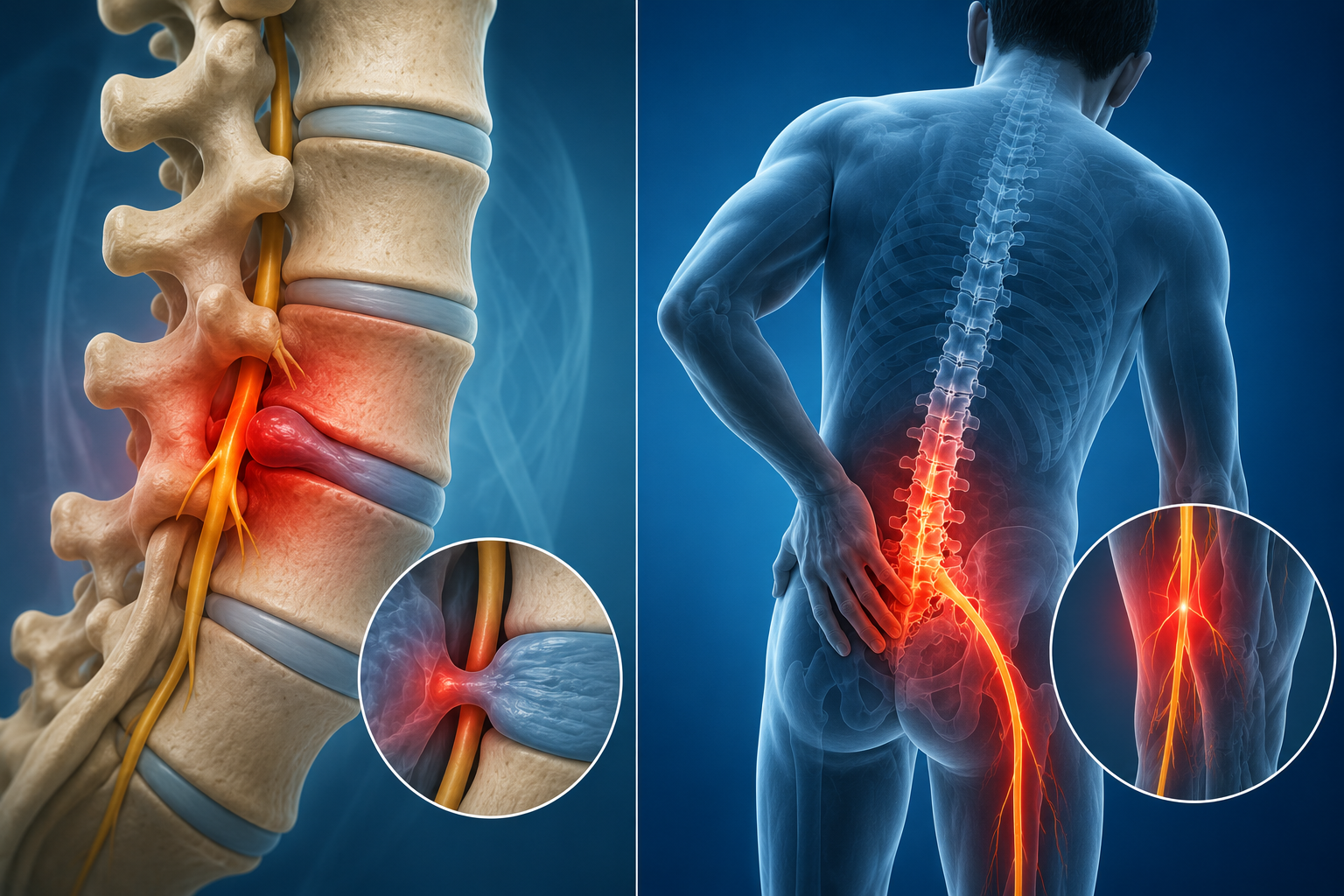
A slip disc, also known as a herniated disc or prolapsed disc, occurs when one of the spinal discs bulges or ruptures. These discs act as cushions between the vertebrae and help absorb shock during movement.
When the outer layer of a disc weakens, the inner gel-like material can protrude outward, putting pressure on nearby nerves. This can result in pain, numbness, tingling, or weakness.
Common Symptoms of a Slip Disc
- Lower back pain
- Neck pain (if the disc is in the cervical spine)
- Pain that worsens with movement
- Numbness or tingling in the arms or legs
- Muscle weakness
- Difficulty standing or walking for long periods
What Is Sciatica?
Sciatica is not a condition itself but a symptom caused by irritation or compression of the sciatic nerve. The sciatic nerve is the largest nerve in the body, running from the lower back through the hips and down each leg.
Sciatica often develops when a herniated disc, bone spur, or spinal narrowing compresses the sciatic nerve.
Common Symptoms of Sciatica
- Sharp pain radiating from the lower back down the leg
- Burning or shooting pain
- Tingling sensations in the leg or foot
- Numbness in the affected leg
- Weakness in the leg muscles
- Pain that worsens while sitting
Key Difference Between Slip Disc and Sciatica
The simplest way to understand the difference is:
A slip disc is a spinal condition.
Sciatica is a symptom caused by nerve compression.
In many cases, a slip disc is actually the reason someone develops sciatica.
Slip Disc
- Structural problem in the spine
- Involves damage or bulging of a spinal disc
- May or may not cause leg pain
Sciatica
- Nerve-related symptom
- Caused by irritation of the sciatic nerve
- Usually causes pain radiating down the leg
What Causes These Conditions?
Several factors can increase the risk of developing a slip disc or sciatica:
- Aging and disc degeneration
- Poor posture
- Heavy lifting
- Repetitive bending or twisting
- Sedentary lifestyle
- Obesity
- Sports injuries
- Prolonged sitting
When Should You See a Spine Specialist?
While mild symptoms may improve with rest and conservative treatment, medical evaluation is recommended if:
- Pain lasts longer than two weeks
- Symptoms are worsening
- Pain radiates into the leg
- You experience numbness or weakness
- Daily activities become difficult
- Walking or standing becomes painful
Immediate medical attention is required if symptoms include loss of bladder or bowel control.
How Are Slip Disc and Sciatica Diagnosed?
A spine specialist will perform:
- Detailed medical history review
- Physical examination
- Neurological assessment
- MRI scan when necessary
- X-rays or additional imaging studies
Accurate diagnosis is essential because treatment depends on the underlying cause.
Treatment Options
Non-Surgical Treatment
Most patients improve without surgery through:
- Physiotherapy
- Posture correction
- Activity modification
- Anti-inflammatory medications
- Stretching and strengthening exercises
Surgical Treatment
Surgery may be considered when:
- Conservative treatment fails
- Severe nerve compression exists
- Progressive weakness develops
- Pain significantly affects quality of life
Modern minimally invasive spine procedures often allow faster recovery and less postoperative discomfort.
Tips to Prevent Slip Disc and Sciatica
- Maintain a healthy weight
- Exercise regularly
- Strengthen core muscles
- Practice proper lifting techniques
- Avoid prolonged sitting
- Maintain good posture
- Use ergonomic workstations
Conclusion
Although slip disc and sciatica are closely related, they are not the same condition. A slip disc refers to damage within the spinal disc, while sciatica describes nerve pain that often results from that disc problem. Early diagnosis and appropriate treatment can help relieve symptoms, prevent complications, and restore an active, pain-free lifestyle.
If you are experiencing persistent back pain, leg pain, numbness, or tingling sensations, consulting a spine specialist can help identify the cause and determine the most effective treatment plan.